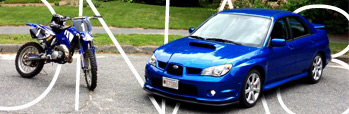

Spent all day waxing...
 Nov 28, 2009 | 10:11 PM
#11

Thread Starter
| Teamspeed Senior Member
Joined: Feb 2008
Posts: 510
From: TN,USA




 Nov 29, 2009 | 12:31 AM
#15

Watch this space.
Joined: Mar 2008
Posts: 12,211
Thanks for posting that. IIRC, the CGT had an actual wrench, not just the socket. Very cool stuff... Is there a torque setting in the socket itself or does it have to be locked with a manual torque wrench?
Nov 29, 2009 | 12:57 AM
#16

Board Certified Car Fanatic
Joined: Jan 2008
Posts: 2,825
Hey Chris ! The CGT had just the socket...and required a torque multiplier tool to get the wheels off. Here is an excerpt from the CGT manual...its tightened to 407 ft lbs ! (So essentially useless to have the socket if you don't have the multiplier or something similar)
"To re−tighten the central nuts to the specified tightening torque, use socket wrench insert 9451 −A−
and torque multiplier 9450 −B− together with a tested commercially available torque wrench.
·
Do not undo the wheel nuts to check whether they are secure. Re−tighten the wheel nuts and check
they fit securely. When using tool B , the specified tightening torque of 550 corresponds to a setting
of 165 Nm (122 ftlb.) on the torque wrench.
·
1. Re−tighten the wheel nuts and check they fit securely. Insert torque wrench into the square of tool −B− .
Observe the tightening direction (in direction of arrow) on the torque wrench because the wheel nuts have
right or left−hand threads. Reverse the torque wrench if necessary. Then re−tighten the wheel nuts to the
specified tightening torque of 550 Nm (407 ftlb.) (corresponds to a setting of 165 Nm (122 ftlb.) on the
torque wrench ) and check they fit securely.
980310"
 Nov 29, 2009 | 09:55 AM
#18
Watch this space.
Joined: Mar 2008
Posts: 12,211
Hey Chris ! The CGT had just the socket...and required a torque multiplier tool to get the wheels off. Here is an excerpt from the CGT manual...its tightened to 407 ft lbs ! (So essentially useless to have the socket if you don't have the multiplier or something similar)
"To re−tighten the central nuts to the specified tightening torque, use socket wrench insert 9451 −A−
and torque multiplier 9450 −B− together with a tested commercially available torque wrench.
·
Do not undo the wheel nuts to check whether they are secure. Re−tighten the wheel nuts and check
they fit securely. When using tool B , the specified tightening torque of 550 corresponds to a setting
of 165 Nm (122 ftlb.) on the torque wrench.
·
1. Re−tighten the wheel nuts and check they fit securely. Insert torque wrench into the square of tool −B− .
Observe the tightening direction (in direction of arrow) on the torque wrench because the wheel nuts have
right or left−hand threads. Reverse the torque wrench if necessary. Then re−tighten the wheel nuts to the
specified tightening torque of 550 Nm (407 ftlb.) (corresponds to a setting of 165 Nm (122 ftlb.) on the
torque wrench ) and check they fit securely.
980310"
"To re−tighten the central nuts to the specified tightening torque, use socket wrench insert 9451 −A−
and torque multiplier 9450 −B− together with a tested commercially available torque wrench.
·
Do not undo the wheel nuts to check whether they are secure. Re−tighten the wheel nuts and check
they fit securely. When using tool B , the specified tightening torque of 550 corresponds to a setting
of 165 Nm (122 ftlb.) on the torque wrench.
·
1. Re−tighten the wheel nuts and check they fit securely. Insert torque wrench into the square of tool −B− .
Observe the tightening direction (in direction of arrow) on the torque wrench because the wheel nuts have
right or left−hand threads. Reverse the torque wrench if necessary. Then re−tighten the wheel nuts to the
specified tightening torque of 550 Nm (407 ftlb.) (corresponds to a setting of 165 Nm (122 ftlb.) on the
torque wrench ) and check they fit securely.
980310"
Thanks for the info. I could have sworn I saw a wrench somewhere for taking off the CGT's wheels. It was really nice - like a one-piece aircraft-quality wrench or something. I'll see if I can dig up a pic. Maybe the guy had it built as a one-off.
I definitely have center-lock envy...