


The Grandfather They Only Thought They Knew
 Dec 29, 2009 | 07:33 PM
#1

Thread Starter
| Full of Win.
Joined: Nov 2008
Posts: 6,295
From: Gobbles Air Force Base


The Grandfather They Only Thought They Knew
The Grandfather They Only Thought They Knew - Plane & Pilot Magazine | PlaneAndPilotMag.com
The Grandfather They Only Thought They Knew
If you don’t ask questions, you won’t get answers
By Budd Davisson
A few minutes ago, I finished reading an official document in which a gentleman I knew, a lawyer, had put himself up for questioning by another lawyer. The goal was to put his life story down on paper for his children and grandchildren, including details about his service as a pilot during World War II. As I’ve said before, and am now saying again: I just wish every veteran had been able to do this for his or her family—and for the rest of the world.
We lost Harry a month or so ago. Though he was an older gentleman, he was, nonetheless, lean and quick of mind, belying what I knew to be more than eight decades of life. He had a soft aura about him that intimated he had done and accomplished a lot in his life. Initially, the only concrete thing I knew about him was that he was the most respected barrister in town.
After running into each other at a half-dozen get-togethers (he was the grandfather of the host), someone mentioned that he had flown during WWII. “He was an ace in the navy, or something like that,” his grandchildren explained vaguely. No one knew the facts—not an unusual situation—but someone mentioned that he still had a plane. That’s when I realized I had seen him before, not just at family events, but also at the airport, getting out of a Cessna cabin-class twin. And he had been at the controls.
“Hi,” I said. “I understand you fly. Is that your 414 I’ve seen out at the airport?” The answer was in the affirmative, and I knew the conversation was off to a good start.
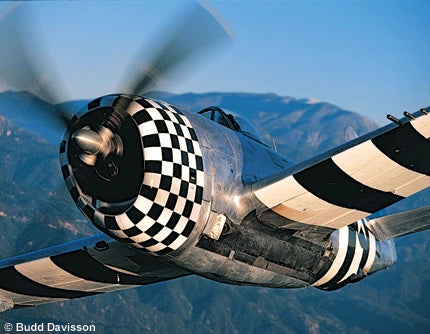
At some point, I learned that he had piloted P-47s in WWII. After further probing revealed that he had been in Italy, I ventured a guess, “Were you with the 57th Fighter Group?” He lit up like a Christmas tree. I had touched a nerve—and a fond memory. We spent a pleasant evening covering subjects he obviously hadn’t spoken about for years, and I was positive I was hearing many things he had never discussed or shared with his family.
I didn’t see him often after that. The last time we met, he looked much older, and the next I heard, he had passed away. Afterwards, I told his grown grandchildren about my discussion with him: Nearly all of it was news to them. Then, yesterday, one of them dropped off the inch-thick deposition. The date stamp indicated it was completed just after he and I had talked, and I’d like to think that our conversation prompted him to put it all down in hard copy.
Among the document’s revelations was an account of how—on three occasions—his airplane had been shot up so badly that he’d had to ditch in the ocean. Why hadn’t he simply bailed out? Well, as he explained, he had once watched a friend die after bailing out of an aircraft. The person had been flying less than 100 feet from Harry when he hit the horizontal stabilizer on his way down and plummeted to his death, unable to open his parachute. Unbeknownst to his family, Harry carried this memory in his mind for his entire life. And it was this image of his friend dying that had haunted him as he’d looked—three times—through the windscreen at the sea, not knowing if he was going to survive or drown. These are thoughts few of us have to carry.
And then there were the missions that earned him a Distinguished Flying Cross and a Silver Star, neither of which are handed out for milk runs. While he was in Italy, Harry’s daily job was to bore through the anti-aircraft fire to bomb and strafe trains, gun emplacements and anything of value. Reading between the lines of the award citations, you realize that continuously pounding valuable targets means repeatedly exposing yourself to a high probability of death. Harry often flew through a curtain of steel, and though enemy fire often got his airplane, he never was seriously wounded. Considering the circumstances, that was nothing short of a miracle—another fact his family hadn’t learned until very late in Harry’s life.
One of Harry’s stories, regarding his first mission, will always stick with me. Unbeknownst to him, ground fire had blown one of the ducts for the cabin heater apart, filling the aircraft cockpit with tremendous heat. Thinking he was on fire, he cranked the canopy back and prepared to bail out. His wingman, however, told him there was no smoke, no visible flame. He looked around and discovered his airplane wasn’t badly hurt, and it was pure fear that had prompted him to make what he later recognized was a dumb decision.
Looking back on that day, Harry noted, “I made up my mind, at that point, that I would never be afraid again. If they’re going to get me, they’re going to get me, but the worse thing I can do is be scared, because that will prevent me from thinking or acting right.” It seems that he carried that philosophy with him in his highly successful professional life.
War changes people. Often the change is for the better, because they’ve experienced death firsthand, and they understand the temporary nature of life. For most, it confers on them a determination to make every minute count—they know it can end, or be inexorably changed, in a heartbeat.
As vets go, Harry was an exception, because he had the foresight to put his life into a spiral-bound notebook that would forever give his family a window into what made him who he was. And that’s the lesson Harry has left with us.
Our kids don’t know who we were before they were born. Even though we lived entire lifetimes before they came into our lives, they only know us as middle-aged parents. Sooner or later, as they mature, however, they’ll turn around and see their parents as human beings with a history, and that’s when a spiral-bound notebook with your life between the covers will become one of their most treasured possessions. So start writing. Notebooks are cheap.
The Grandfather They Only Thought They Knew
If you don’t ask questions, you won’t get answers
By Budd Davisson
A few minutes ago, I finished reading an official document in which a gentleman I knew, a lawyer, had put himself up for questioning by another lawyer. The goal was to put his life story down on paper for his children and grandchildren, including details about his service as a pilot during World War II. As I’ve said before, and am now saying again: I just wish every veteran had been able to do this for his or her family—and for the rest of the world.
We lost Harry a month or so ago. Though he was an older gentleman, he was, nonetheless, lean and quick of mind, belying what I knew to be more than eight decades of life. He had a soft aura about him that intimated he had done and accomplished a lot in his life. Initially, the only concrete thing I knew about him was that he was the most respected barrister in town.
After running into each other at a half-dozen get-togethers (he was the grandfather of the host), someone mentioned that he had flown during WWII. “He was an ace in the navy, or something like that,” his grandchildren explained vaguely. No one knew the facts—not an unusual situation—but someone mentioned that he still had a plane. That’s when I realized I had seen him before, not just at family events, but also at the airport, getting out of a Cessna cabin-class twin. And he had been at the controls.
“Hi,” I said. “I understand you fly. Is that your 414 I’ve seen out at the airport?” The answer was in the affirmative, and I knew the conversation was off to a good start.
At some point, I learned that he had piloted P-47s in WWII. After further probing revealed that he had been in Italy, I ventured a guess, “Were you with the 57th Fighter Group?” He lit up like a Christmas tree. I had touched a nerve—and a fond memory. We spent a pleasant evening covering subjects he obviously hadn’t spoken about for years, and I was positive I was hearing many things he had never discussed or shared with his family.
I didn’t see him often after that. The last time we met, he looked much older, and the next I heard, he had passed away. Afterwards, I told his grown grandchildren about my discussion with him: Nearly all of it was news to them. Then, yesterday, one of them dropped off the inch-thick deposition. The date stamp indicated it was completed just after he and I had talked, and I’d like to think that our conversation prompted him to put it all down in hard copy.
Among the document’s revelations was an account of how—on three occasions—his airplane had been shot up so badly that he’d had to ditch in the ocean. Why hadn’t he simply bailed out? Well, as he explained, he had once watched a friend die after bailing out of an aircraft. The person had been flying less than 100 feet from Harry when he hit the horizontal stabilizer on his way down and plummeted to his death, unable to open his parachute. Unbeknownst to his family, Harry carried this memory in his mind for his entire life. And it was this image of his friend dying that had haunted him as he’d looked—three times—through the windscreen at the sea, not knowing if he was going to survive or drown. These are thoughts few of us have to carry.
And then there were the missions that earned him a Distinguished Flying Cross and a Silver Star, neither of which are handed out for milk runs. While he was in Italy, Harry’s daily job was to bore through the anti-aircraft fire to bomb and strafe trains, gun emplacements and anything of value. Reading between the lines of the award citations, you realize that continuously pounding valuable targets means repeatedly exposing yourself to a high probability of death. Harry often flew through a curtain of steel, and though enemy fire often got his airplane, he never was seriously wounded. Considering the circumstances, that was nothing short of a miracle—another fact his family hadn’t learned until very late in Harry’s life.
One of Harry’s stories, regarding his first mission, will always stick with me. Unbeknownst to him, ground fire had blown one of the ducts for the cabin heater apart, filling the aircraft cockpit with tremendous heat. Thinking he was on fire, he cranked the canopy back and prepared to bail out. His wingman, however, told him there was no smoke, no visible flame. He looked around and discovered his airplane wasn’t badly hurt, and it was pure fear that had prompted him to make what he later recognized was a dumb decision.
Looking back on that day, Harry noted, “I made up my mind, at that point, that I would never be afraid again. If they’re going to get me, they’re going to get me, but the worse thing I can do is be scared, because that will prevent me from thinking or acting right.” It seems that he carried that philosophy with him in his highly successful professional life.
War changes people. Often the change is for the better, because they’ve experienced death firsthand, and they understand the temporary nature of life. For most, it confers on them a determination to make every minute count—they know it can end, or be inexorably changed, in a heartbeat.
As vets go, Harry was an exception, because he had the foresight to put his life into a spiral-bound notebook that would forever give his family a window into what made him who he was. And that’s the lesson Harry has left with us.
Our kids don’t know who we were before they were born. Even though we lived entire lifetimes before they came into our lives, they only know us as middle-aged parents. Sooner or later, as they mature, however, they’ll turn around and see their parents as human beings with a history, and that’s when a spiral-bound notebook with your life between the covers will become one of their most treasured possessions. So start writing. Notebooks are cheap.
 Dec 29, 2009 | 08:51 PM
#3
Thread Starter
| Full of Win.
Joined: Nov 2008
Posts: 6,295
From: Gobbles Air Force Base
^^ You're welcome.
So I did some quick digging and identified the "Harry" in the story. Here is the Distinguished Flying Cross citation:
Rank: Captain
Unit: 91st Bombardment Group (H), Army Air Forces, United States Army
Citation:
"For extraordinary achievement and heroism while serving as Co-navigator of the leading airplane of his Group on a bombing raid over Germany, 21 May 1943. Just before reaching the target, Captain Ackerman was seriously and painfully wounded by an exploding 20 MM cannon shell. With complete disregard for his wounds, Captain Ackerman bravely continued firing the nose guns and skillfully fought off fierce frontal attacks by enemy fighter planes. When the attacks ceased, Captain Ackerman collaborated with the group-navigator, who was also wounded, in returning the formation to its home base. The bravery, skill and devotion to duty displayed by Captain Ackerman on this occasion reflect the highest credit upon himself and the Armed Forces of the United States."
I can't track down the citation for the Silver Star claimed in the story.
So I did some quick digging and identified the "Harry" in the story. Here is the Distinguished Flying Cross citation:
Rank: Captain
Unit: 91st Bombardment Group (H), Army Air Forces, United States Army
Citation:
"For extraordinary achievement and heroism while serving as Co-navigator of the leading airplane of his Group on a bombing raid over Germany, 21 May 1943. Just before reaching the target, Captain Ackerman was seriously and painfully wounded by an exploding 20 MM cannon shell. With complete disregard for his wounds, Captain Ackerman bravely continued firing the nose guns and skillfully fought off fierce frontal attacks by enemy fighter planes. When the attacks ceased, Captain Ackerman collaborated with the group-navigator, who was also wounded, in returning the formation to its home base. The bravery, skill and devotion to duty displayed by Captain Ackerman on this occasion reflect the highest credit upon himself and the Armed Forces of the United States."
I can't track down the citation for the Silver Star claimed in the story.


 Jan 3, 2010 | 04:26 AM
#7

Teamspeed Junior Member
Joined: Nov 2009
Posts: 76
From: USA
After reading this article I have fully realized how envious I am those who held positions in the military that allow them the privilege of discussing their military experiences with their loved ones as well as those whom they may never meet. Like many of those I served with in the military who served under the umbrella of a top secret security clearance, our stories may never see the light of day. It is only within our own private circles that we discuss our so-called "glory days" My loved ones and friends may never get to know what we went through and I think that is just a damn shame.
Jan 10, 2010 | 06:19 PM
#8

Teamspeed Junior Member
Joined: Apr 2008
Posts: 50
After reading this article I have fully realized how envious I am those who held positions in the military that allow them the privilege of discussing their military experiences with their loved ones as well as those whom they may never meet. Like many of those I served with in the military who served under the umbrella of a top secret security clearance, our stories may never see the light of day. It is only within our own private circles that we discuss our so-called "glory days" My loved ones and friends may never get to know what we went through and I think that is just a damn shame.
Jan 10, 2010 | 06:26 PM
#9

Teamspeed Pro
Joined: Oct 2008
Posts: 4,266
From: St. Peters, MO (outside STL)
After reading this article I have fully realized how envious I am those who held positions in the military that allow them the privilege of discussing their military experiences with their loved ones as well as those whom they may never meet. Like many of those I served with in the military who served under the umbrella of a top secret security clearance, our stories may never see the light of day. It is only within our own private circles that we discuss our so-called "glory days" My loved ones and friends may never get to know what we went through and I think that is just a damn shame.
and that was a great read, thanks for posting

Thread
Thread Starter
Forum
Replies
Last Post
Rennen Forged
The Teamspeed Wheel & Tire Forum
0
Jul 8, 2015 01:21 PM
STOPPIE
General Automotive & SUV Forum
14
Jan 26, 2011 04:36 AM
Bookmarks


Currently Active Users Viewing This Thread: 1 (0 members and 1 guests)