
McLaren Speedtail Blows Past F1 with 250 MPH Top Speed
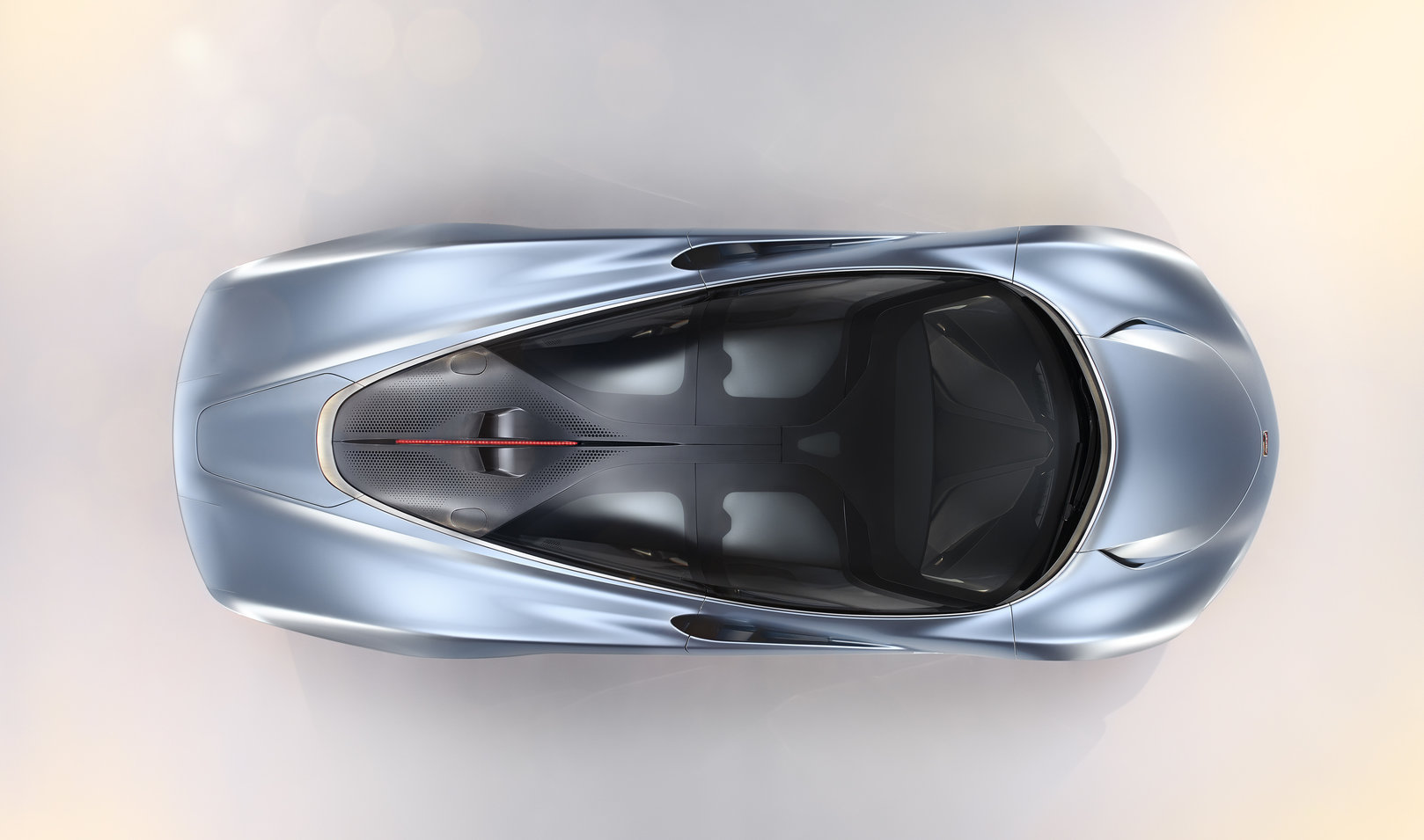
McLaren’s vision for the Speedtail – to create the ultimate in bespoke vehicle design – begins with carbon fiber, a material that McLaren has pioneered for nearly four decades, with every road or race car it has built since 1981 having a strong, stiff and light composite structure at its core. The Speedtail marks a revolutionary advance in the creation and usage of carbon by McLaren, with state-of-the-art technologies combining with traditional Italian textile knowledge to conceive a ‘digital loom’ process that delivers an even lighter composite material formed from an intricate carbon fiber weave.
Pursuing further innovation, McLaren utilized this digital loom technique to develop a unique carbon fiber and titanium weave, christened Titanium Deposition Carbon Fiber. Traditional methods to change the color of carbon fiber can compromise the material’s structural integrity and visual clarity; for the Speedtail, a micron-thin layer of titanium is fused directly onto the weave and becomes an integral part of the carbon fiber’s construction. The titanium deposition process maintains immense strength and low weight and creates a truly remarkable finish of visual carbon fiber with a chrome-effect shimmer.
The front splitter, diffuser and side skirts are all finished in 1K Titanium Deposition Carbon Fiber. This material has just 1000 fibers per thread, making it lighter than the 3K alternative and allowing the adoption of a Jacquard weaving process to create an intricate, bespoke pattern in the Visual Carbon Fiber elements. The titanium can additionally be anodized in any bespoke color or used to create interwoven images, symbols or even words within the carbon – for example, the rear of the driver’s seat features the McLaren logo.
Working in collaboration with expert Swiss watchmaker, Richard Mille, McLaren used pioneering horology techniques to develop a world-first in the automotive sector: Thin-Ply Technology Carbon Fiber (TPT). The material is comprised of countless ultra-thin carbon layers just 30 microns in depth, each positioned at a 45° angle. The surface is then delicately milled to expose a stratified, shimmering construction that resembles flowing water. This fusion of cutting-edge technology and design with precision engineering is truly unique and can be integrated into areas of the Speedtail such as the overhead control panel, gearshift paddles and steering wheel clasp. TPT is also used in combination with 18-carat white gold to create the McLaren badge on the front of the first Speedtail design model.
You must be logged in to post a comment.