Introducing the Switzer R911S and R911S GT2 Carbon
 May 14, 2010 | 04:34 PM
#1

Introducing the Switzer R911S and R911S GT2 Carbon
May 14, 2010
R911S and R911S GT2 Carbon
AT SPEED | NELSON LEDGES
Porsche's 2011 GT2 RS is the fastest roadgoing car in the company's history, but it's not quite fast enough to suit Tym Switzer's demanding clients. Tym's company, Ohio-based tuning firm Switzer Performance, announced their new Switzer GT2 R911S this morning - a super-997 GT2 with over nine hundred horsepower and racetrack-oriented revisions to ensure that even the mighty GT2 RS will disappear in its rearview mirrors.

SWITZER R911S DELIVERS 800+ WHP ON VP C16 RACE FUEL
The Switzer GT2 R911S takes the firm's well-proven P800 GT2 package and pushes it further. Using VP race fuel, the R911 delivers well over eight hundred horsepower at the rear wheels, equating to roughly 50% more power than Porsche's GT2 RS, with a pair of Switzer MONSTER intercoolers ensuring consistent engine performance lap after lap.
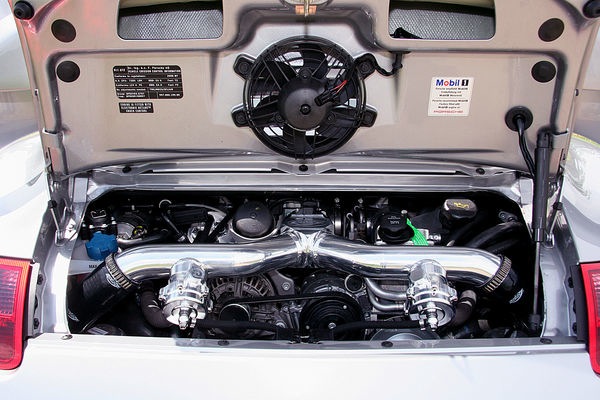
POLISHED ALUMINUM UPPER PIPE w/ BILLET BOVs
With a (conservative) 911 hp on tap, virtually nothing in the world can pass Switzer's R911S GT2 in a straight line. To maintain that advantage in the corners, Switzer's R911S features a Switzer-specific titanium inverted-front-strut, remote-reservoir suspension engineered by the track experts at JRZ. This isn't "racing-style" suspension; the hardware is a true JRZ racing setup that has been torture-tested in the Patron GT3 Cup and Grand-Am Rolex GT series – barely tamed for the street with a few easy knob-twists. Each one of Switzer's R911S cars will be feature hand-selected spring and damping rates, specifically catering to each client's track experience and level of aggression.

JRZ PORSCHE CUP SUSPENSION
Switzer's R911S already offers a power-to-weight ratio which simply eviscerates Porsche's newest factory flagship - but for the customer who has to cut every last ounce of extra mass from the car, Switzer offers the R911S Carbon - an exclusive suite of lightweight carbon-fiber body panels that sheds weight from the R911S and lowers the car's center of gravity for maximum performance in advanced-level trackday and time-attack sessions. Developed by the low-mass experts at Seibon Carbon, the lightweight panels are the final nail in the coffin for Porsche's factory GT2 RS.
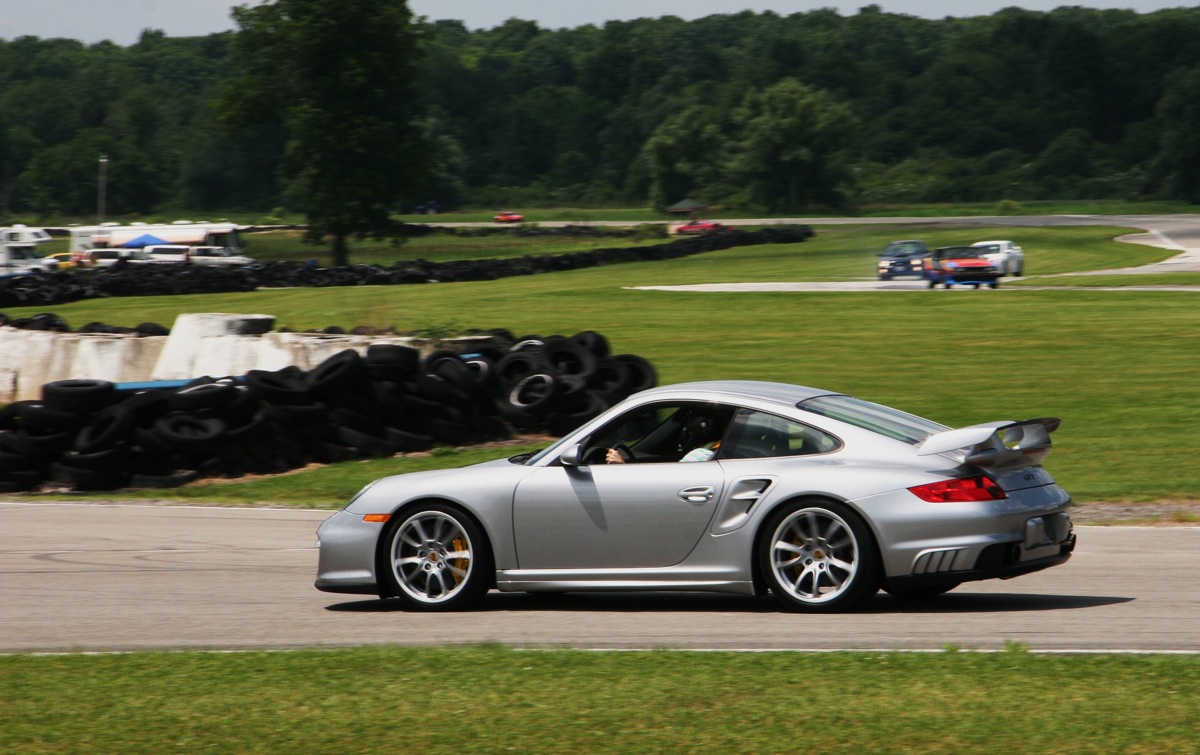
While Porsche GT2 RS customers are lining up to beg their local dealer for a spot in line, Switzer Performance can offer the silver GT2 R911S pictured here for immediate delivery. Pricing for the standard vehicle starts at $199,900, while the R911S Carbon is priced at $239,900, contact Switzer Performance for more.
Click HERE for more pictures.
R911S and R911S GT2 Carbon
AT SPEED | NELSON LEDGES
Porsche's 2011 GT2 RS is the fastest roadgoing car in the company's history, but it's not quite fast enough to suit Tym Switzer's demanding clients. Tym's company, Ohio-based tuning firm Switzer Performance, announced their new Switzer GT2 R911S this morning - a super-997 GT2 with over nine hundred horsepower and racetrack-oriented revisions to ensure that even the mighty GT2 RS will disappear in its rearview mirrors.
SWITZER R911S DELIVERS 800+ WHP ON VP C16 RACE FUEL
The Switzer GT2 R911S takes the firm's well-proven P800 GT2 package and pushes it further. Using VP race fuel, the R911 delivers well over eight hundred horsepower at the rear wheels, equating to roughly 50% more power than Porsche's GT2 RS, with a pair of Switzer MONSTER intercoolers ensuring consistent engine performance lap after lap.
POLISHED ALUMINUM UPPER PIPE w/ BILLET BOVs
With a (conservative) 911 hp on tap, virtually nothing in the world can pass Switzer's R911S GT2 in a straight line. To maintain that advantage in the corners, Switzer's R911S features a Switzer-specific titanium inverted-front-strut, remote-reservoir suspension engineered by the track experts at JRZ. This isn't "racing-style" suspension; the hardware is a true JRZ racing setup that has been torture-tested in the Patron GT3 Cup and Grand-Am Rolex GT series – barely tamed for the street with a few easy knob-twists. Each one of Switzer's R911S cars will be feature hand-selected spring and damping rates, specifically catering to each client's track experience and level of aggression.

JRZ PORSCHE CUP SUSPENSION
Switzer's R911S already offers a power-to-weight ratio which simply eviscerates Porsche's newest factory flagship - but for the customer who has to cut every last ounce of extra mass from the car, Switzer offers the R911S Carbon - an exclusive suite of lightweight carbon-fiber body panels that sheds weight from the R911S and lowers the car's center of gravity for maximum performance in advanced-level trackday and time-attack sessions. Developed by the low-mass experts at Seibon Carbon, the lightweight panels are the final nail in the coffin for Porsche's factory GT2 RS.
While Porsche GT2 RS customers are lining up to beg their local dealer for a spot in line, Switzer Performance can offer the silver GT2 R911S pictured here for immediate delivery. Pricing for the standard vehicle starts at $199,900, while the R911S Carbon is priced at $239,900, contact Switzer Performance for more.
Click HERE for more pictures.


 May 15, 2010 | 05:21 AM
#4

Teamspeed Junior Member
Joined: May 2009
Posts: 79
From: South Germany


First of all, I'd like to state my respect for the work of Switzer, especially on the GT-Rs. But I do have some questions:
You claim incredible amounts of power for Porsche TT engines with your bolt-on kits, and it seems they really are delivering that hp, and for a very low price. But do you have any real long-term experience how long these engines will last? An engine that has 500hp from the factory can't have all its internals built strong enough for 800hp, that would be stupidity on Porsche's side. Ruf does extensive work on the engine internals for their R Turbo/RT12 cars that have 700hp at the most. So do (or have done) many other tuners such as Techart and Gemballa. However, especially the Ruf cars are known to be strong enough to sustain top speed drives on our Autobahns for a long time. They are what we call "vollgasfest" (literal translation: full-throttle resistant). That means you can drive them at full load at top speed until the fuel runs out, fill them up and continue. I realize that on the American market, almost no customers will put their cars to such strain. But a GT2 engine that makes a claimed 530hp stock (in reality, it's a bit more than that) and is pushed to 900hp using stock internals will break eventually, and a lot sooner than in stock form.
This isn't supposed to be an attack on Switzer. They offer maximum power for minimal costs, and I assume that their customers know what they're doing.
You claim incredible amounts of power for Porsche TT engines with your bolt-on kits, and it seems they really are delivering that hp, and for a very low price. But do you have any real long-term experience how long these engines will last? An engine that has 500hp from the factory can't have all its internals built strong enough for 800hp, that would be stupidity on Porsche's side. Ruf does extensive work on the engine internals for their R Turbo/RT12 cars that have 700hp at the most. So do (or have done) many other tuners such as Techart and Gemballa. However, especially the Ruf cars are known to be strong enough to sustain top speed drives on our Autobahns for a long time. They are what we call "vollgasfest" (literal translation: full-throttle resistant). That means you can drive them at full load at top speed until the fuel runs out, fill them up and continue. I realize that on the American market, almost no customers will put their cars to such strain. But a GT2 engine that makes a claimed 530hp stock (in reality, it's a bit more than that) and is pushed to 900hp using stock internals will break eventually, and a lot sooner than in stock form.
This isn't supposed to be an attack on Switzer. They offer maximum power for minimal costs, and I assume that their customers know what they're doing.

 May 16, 2010 | 09:34 AM
#8
Teamspeed Senior Member
Joined: Nov 2008
Posts: 307
First of all, I'd like to state my respect for the work of Switzer, especially on the GT-Rs. But I do have some questions:
You claim incredible amounts of power for Porsche TT engines with your bolt-on kits, and it seems they really are delivering that hp, and for a very low price. But do you have any real long-term experience how long these engines will last? An engine that has 500hp from the factory can't have all its internals built strong enough for 800hp, that would be stupidity on Porsche's side. Ruf does extensive work on the engine internals for their R Turbo/RT12 cars that have 700hp at the most. So do (or have done) many other tuners such as Techart and Gemballa. However, especially the Ruf cars are known to be strong enough to sustain top speed drives on our Autobahns for a long time. They are what we call "vollgasfest" (literal translation: full-throttle resistant). That means you can drive them at full load at top speed until the fuel runs out, fill them up and continue. I realize that on the American market, almost no customers will put their cars to such strain. But a GT2 engine that makes a claimed 530hp stock (in reality, it's a bit more than that) and is pushed to 900hp using stock internals will break eventually, and a lot sooner than in stock form.
This isn't supposed to be an attack on Switzer. They offer maximum power for minimal costs, and I assume that their customers know what they're doing.
You claim incredible amounts of power for Porsche TT engines with your bolt-on kits, and it seems they really are delivering that hp, and for a very low price. But do you have any real long-term experience how long these engines will last? An engine that has 500hp from the factory can't have all its internals built strong enough for 800hp, that would be stupidity on Porsche's side. Ruf does extensive work on the engine internals for their R Turbo/RT12 cars that have 700hp at the most. So do (or have done) many other tuners such as Techart and Gemballa. However, especially the Ruf cars are known to be strong enough to sustain top speed drives on our Autobahns for a long time. They are what we call "vollgasfest" (literal translation: full-throttle resistant). That means you can drive them at full load at top speed until the fuel runs out, fill them up and continue. I realize that on the American market, almost no customers will put their cars to such strain. But a GT2 engine that makes a claimed 530hp stock (in reality, it's a bit more than that) and is pushed to 900hp using stock internals will break eventually, and a lot sooner than in stock form.
This isn't supposed to be an attack on Switzer. They offer maximum power for minimal costs, and I assume that their customers know what they're doing.